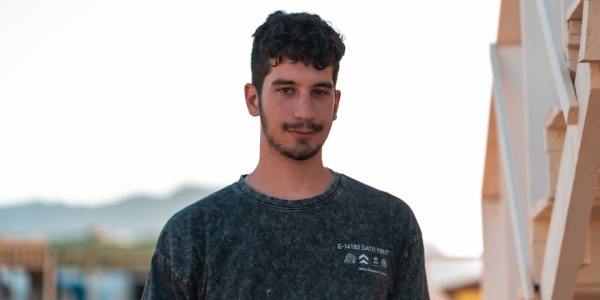
When most people picture breakdancing, they see two extremes: teenagers spinning on cardboard in subway stations, or Olympic athletes executing gravity-defying power moves in Paris arenas. But between these poles lives the intermediate breakdancer—someone who has moved beyond the basics yet remains years from mastery, occupying a space that is equal parts grind, community, and identity crisis.
Defining the "Intermediate" Reality
In breaking culture, "intermediate" is not a casual designation. It typically marks the 3-to-7-year window where a dancer has committed enough to restructure their life around practice, but not enough to earn income from the craft. Operationally, this means you've unlocked windmills but not airflares; you can hold freezes but struggle with complex threading combinations; you compete at local jams and occasionally advance through preliminary rounds at major events.
The physical demands at this stage are brutally specific. It's not generic "strength and flexibility"—it's the shoulder durability to absorb thousands of failed windmill attempts, the ankle stability for six-step variations that last forty seconds straight, and the finger strength for controlled handstand freezes that look effortless but require crushing grip endurance. Intermediates don't just practice; they rehabilitate. The injury patterns are distinctive: chronic wrist inflammation from handstands, lower back compression from repetitive drops, and the psychological plateau that arrives when power moves stall for months despite daily drilling.
The Olympic Aftermath
2024 changed everything for this cohort. When breaking debuted as an Olympic sport in Paris, it created a fracture in the intermediate experience that didn't exist before. Suddenly, there was a visible "pro" pathway—national federations, qualifying events, performance coaching—that pulled ambitious intermediates toward athletic optimization. But the vast majority discovered they were training for a destination that would never include them, forcing a reckoning: do you pivot toward Olympic-adjacent structures, or double down on the underground culture that built the art form?
This tension plays out in practice spaces worldwide. The explosion of online tutorials has created a generation of self-taught intermediates who can execute technically clean moves without the cypher etiquette, the historical knowledge, or the mentorship relationships that traditionally marked progression. They learn airchair mechanics from YouTube but miss the peer correction that prevents bad habits from calcifying. The result is a stratified intermediate class: those with crew lineage and those without, sometimes sharing the same practice floor with vastly different understandings of what they're training for.
The Economics of Commitment
The stereotype of breaking as solo pursuit collapses fastest at the intermediate level. This is where collaboration becomes infrastructure. Most intermediate dancers anchor local crews not for performance opportunities, but for resource pooling—splitting studio rentals, sharing travel costs to out-of-state jams, dividing the labor of organizing practice sessions. The social dimension is financial necessity disguised as community.
Cyphers—the informal circles where dancers take turns showcasing—are where intermediates both learn and contribute. Unlike beginners who watch, or advanced dancers who dominate, intermediates occupy the educational middle: receiving feedback from veterans while modeling fundamentals for newcomers. It's unpaid labor that sustains the culture, and it requires skills never captured in tutorial videos: reading the energy of a rotating circle, knowing when to enter and exit, building sets that respond to the specific DJ's track selection.
Global Roots, Local Pressure
Breaking's expansion beyond its African American and Latino origins in 1970s New York has created particular complexities for today's intermediates. A dancer in Seoul, São Paulo, or Stockholm now faces a global standard—what wins at Red Bull BC One qualifiers in their region—while navigating local stylistic expectations that may conflict with that standard. The intermediate years are when these tensions become unavoidable: do you polish your power moves to international competition specs, or develop the regional flavor that earns respect in your immediate community?
This diversity is not abstract demographic inclusion. It manifests in specific training decisions. A Japanese intermediate might prioritize intricate footwork sequences that reflect their scene's emphasis on foundation. A French intermediate might focus on dynamic freezes influenced by their country's circus tradition. An American intermediate in a smaller market might struggle to find any peer group at their level, training in isolation through Discord communities and occasional travel. The "inclusive art form" framing misses these material disparities in access and expectation.
The Long Middle
What the stereotypes miss—what this article keeps circling—is that intermediate breaking is primarily an experience of duration without destination. Most who reach this level will never go pro, never qualify for international competition, never achieve the visibility that justifies the sacrifice to outsiders. They continue because the practice itself has become identity: the Tuesday and Thursday evening sessions, the ongoing negotiation with family or employers about time allocation, the slow accumulation of battle scars and minor victories.
The 2024 intermediate breakdancer operates in a culture transformed by Olympic legitimization but not defined by it. They are skilled enough to see