In a corner of Oklahoma where golden wheat fields stretch toward the horizon and the wind carries the quiet confidence of the prairie, something unexpected is happening. Teenagers in leotards are pirouetting through community center hallways. Five-year-olds are mastering their first port de bras. And somewhere in a converted gymnasium that smells of floor polish and possibility, a student is quietly rehearsing a variation that might just change her life.
Ponca City Ballet Programs shouldn't work. It's a town of 25,000 people, not exactly the ballet capitals of New York or Paris. Yet year after year, this small-town program produces dancers who go on to professional companies, summer intensives at prestigious schools, and college programs across the country. How? The answer lies in what happens when limitation becomes fuel.
I visited Ponca City last spring and sat in on a technique class taught by longtime director Marcy Hendricks. What struck me wasn't the choreography or the barre work—it was the way she spoke to her students. "Your body is not a problem to be solved," she told a frustrated teenager struggling with her extension. "It's a instrument to be understood." That philosophy permeates everything about the program. It's not about producing carbon copies of idealized ballerinas. It's about helping each dancer discover what their particular body wants to express.
The program offers five levels of technique classes, plus pointe, variations, contemporary, and a unique "Ballet for Athletes" class that helps cross-train football players and gymnasts in movement quality and body awareness. Registration has grown 40% in three years, drawing students not just from Ponca City but from surrounding towns an hour away. Families are willing to drive through tornado country and oil-field roads because word has spread: this program produces results without producing trauma.
Sarah Mitchell, 17, started dancing at PCBP at age eight. Last summer she attended Ballet Austin's intensive on scholarship. "I walked in thinking everyone would be miles ahead of me," she told me between pliés. "But my teachers there said I had better foundational training than kids from much bigger programs. We spend so much time on the basics here—proper alignment, musicality, floor work—that when I got there, I could actually listen to the music while I danced. That's not something you learn in a year."
The inclusivity piece isn't performative here. Need-based scholarships cover tuition for about a quarter of enrolled students. The program has partnered with the local school district to offer after-school dance as an alternative to unsupervised hours. One father told me his daughter used to dread coming home after school; now she runs to ballet three days a week. "It's not just dance," he said. "It's the only thing in her life she feels genuinely good at."
What strikes visitors is the absence of the hypercompetitive, body-shaming culture that plagues too many ballet studios. Parents in the waiting room speak about the program the way other parents speak about good schools—not as resume builders but as places their kids actually want to be. A sign in the hallway reads: "Leave your comparison at the door." The director admits she almost took it down because it seemed cliché, but student feedback convinced her it matters.
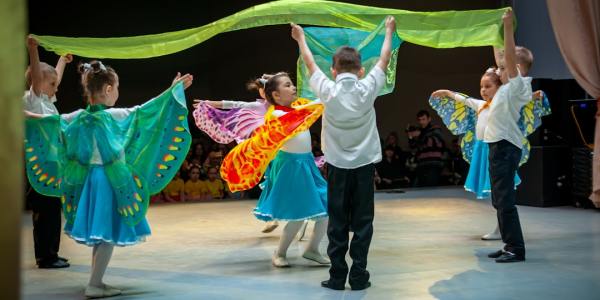
Performance opportunities are substantial. The annual spring showcase features three separate casts of the same ballet, ensuring every student who wants to perform gets a meaningful role. The Nutcracker production draws community volunteers for sets and costumes, creating a town-wide collaboration that has become a beloved local tradition. Student choreography showcases allow advanced students to create and direct their own pieces—a skill most professional dancers never learn until they're thrust into artistic careers.
The facilities are modest. The sprung floor is original to the 1987 renovation. Mirrors are scuffed in places. But the infrastructure serves the mission. The converted space means overhead is low, which means tuition stays affordable, which means more kids can participate. There's something philosophically coherent about a ballet program that practices what it preaches about accessibility in a building that refuses to perform opulence.
Advanced students can audition for the pre-professional track, which includes summer intensive preparation, audition travel support, and mentorship from program alumni now dancing professionally. Three graduates from the past five years have landed company contracts or university scholarships. For a program of its size, that track record turns heads at regional festivals.
What's happening in Ponca City matters beyond dance. It's a case study in what communities can build when they refuse to accept the false choice between excellence and inclusion. The dancers who leave here carry technique, yes—but more importantly, they carry a healthy relationship with their bodies, an understanding of discipline without punishment, and the memory of teachers who believed in their potential before they believed in themselves.
The prairie wind was still blowing when I left. Inside, a pianist was playing Chopin for an intermediate class, and somewhere in that converted gymnasium, a twelve-year-old named Emma was finally landing her first double pirouette. She didn't know I was watching. She didn't know anyone was watching. She just spun, stuck the landing, and her whole face lit up like someone had set off a small sun behind her eyes.
That's the moment Ponca City Ballet Programs exist for. Not the trophies, not the scholarships, not the accolades. The spinning. The sticking. The light.