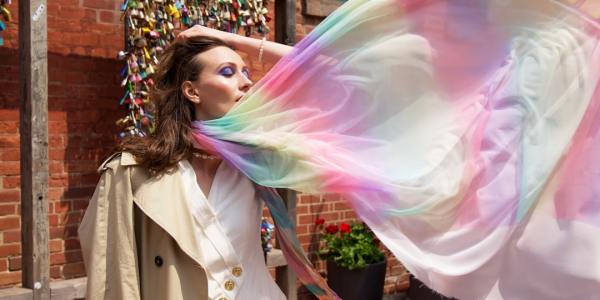
For decades, Oceanside's cultural identity was defined by surf breaks, fish tacos, and a laid-back shoreline tempo. But since 2018, something unexpected has been happening inland. A cluster of independent dance studios has turned this coastal city of 170,000 into one of Southern California's most closely watched training grounds for young choreographers.
The shift wasn't orchestrated by a single institution or city grant. It began with a diaspora: Los Angeles-based dancers and educators, priced out of Hollywood and Downtown LA, began resettling in northern San Diego County. They brought rigorous training philosophies, professional networks, and a willingness to experiment. What emerged was not a satellite of the LA dance industry but something more idiosyncratic—a scene less focused on commercial backup dancing and more invested in cultivating original voices.
Three Studios, Three Distinct Philosophies
Today, Oceanside's dance infrastructure is concentrated in three studios, each with a clearly defined identity and training model.
The Fusion Studio: Composition as Requirement
Housed in a converted 1940s citrus-packing warehouse on Coast Highway, The Fusion Studio has made originality a curricular pillar, not just a talking point. Every student enrolled in its pre-conservatory track must complete a five-minute original composition by age sixteen. The requirement, implemented in 2021, has already produced measurable results: three National YoungArts finalists in two years and a 2023 piece by graduate Mara Okonkwo that was programmed at the Lyon Biennale de la Danse.
Technical training is equally uncompromising. Morning classes alternate between Vaganova ballet and contemporary floorwork; afternoons are reserved for choreographic labs where students workshop pieces in progress. "We're not interested in producing dancers who can only execute someone else's vision," says artistic director Lena Voss, a former Nederlands Dans Theater performer who relocated to Oceanside in 2019. "If you leave here without having failed at making your own work, we've done something wrong."
Rhythmic Innovations Academy: Choreography for Screens and Headsets
While Fusion prioritizes the stage, Rhythmic Innovations Academy has built its reputation at the intersection of dance and emerging technology. In 2020, co-founders Derek Chen and Amara Osei—both former motion-capture performers for a major video game studio—installed a 12-camera OptiTrack system in a second-floor studio above Mission Avenue.
Students here learn traditional partnering and improvisation, but they also spend dedicated hours each week choreographing for virtual production. Senior students regularly produce short pieces for VR headsets and volumetric video installations. Last spring, the academy's student ensemble collaborated with UC San Diego's Qualcomm Institute on Embodied Code, an augmented-reality performance that allowed audience members to manipulate dancers' digital avatars in real time through a mobile interface.
"The body doesn't disappear when the medium changes," Chen notes. "But the choreographer's toolkit absolutely does. We're trying to prepare students for a landscape where 'live performance' isn't the default."
The Choreographer's Lab: Collaboration Without Hierarchy
The youngest of the three, The Choreographer's Lab opened in 2022 in a shared arts complex near the Oceanside Transit Center. It operates less like a conventional school and more like a residency program for teenagers and early-career professionals. There are no permanent faculty members; instead, the space hosts rotating three-week intensives led by visiting artists.
Recent mentors have included former Alvin Ailey reconstructor Matthew Rushing, Brazilian choreographer Bruno Beltrão, and LA-based dance filmmaker C. Prissy. The model deliberately erases the traditional student-teacher hierarchy: participants co-create the final showing with the guest artist, and works are developed through consensus rather than top-down direction.
"The first intensive I did here, I argued with a guest artist for two days about whether a phrase should travel upstage or downstage," recalls 19-year-old Lab regular Sofia Delgado. "At my old studio, that would have been unthinkable. Here, it was expected."
From Local Experiment to Broader Attention
The concentration of specialized training has had visible ripple effects. Graduates of Oceanside programs are increasingly represented in regional and national showcases: six alumni across the three studios appeared in the 2023 and 2024 editions of the National Choreography Competition in Portland. Local presenters, including the Oceanside Theatre Company and the Frontline concert series in Carlsbad, have expanded their dance programming to accommodate the surge in new work.
Perhaps more significantly, the studios have begun to collaborate with one another. In January 2024, Fusion and Rhythmic Innovations co-produced Signal/Noise, a split bill that paired Voss's students with Chen's motion-capture ensemble. The sold-out run at the Brooks Theater marked the first time the two studios had shared a formal season.
Not everything is frictionless. Some