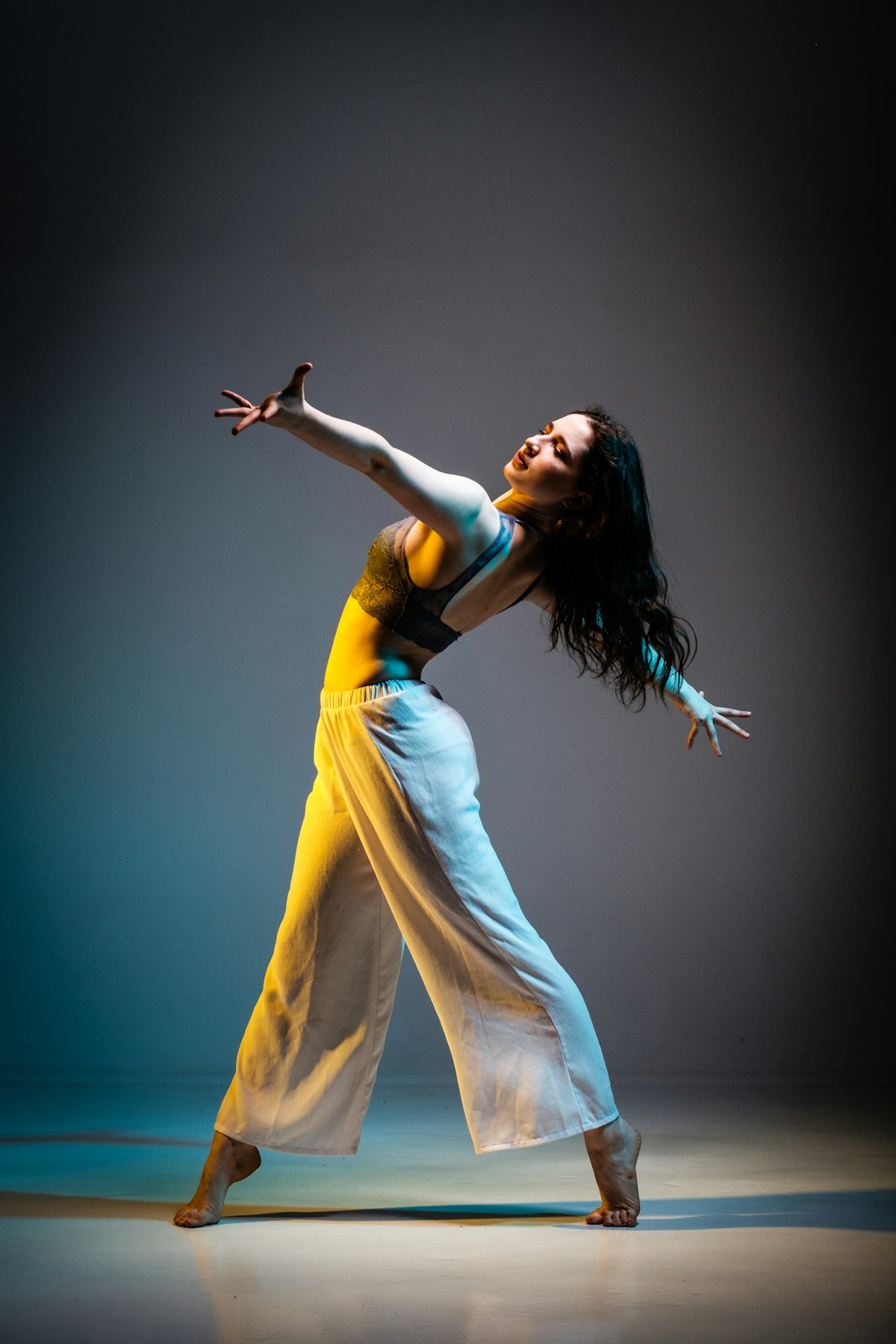
From Class to Performance: Anoka's Training Grounds for Contemporary Dancers
How a unassuming studio in the Midwest is redefining the pipeline from technical training to raw, stage-ready artistry.
In the ecosystem of contemporary dance, there are glittering conservatories and famed urban incubators. And then there are places like Anoka. Tucked away from the coastal hubs, this collective-run studio has, over the past eight years, quietly become one of the most fertile training grounds for dancers who don't just execute, but inhabit.
What makes Anoka distinct isn't a proprietary technique or a star choreographer at its helm. It’s a philosophy: the erasure of the line between classroom and performance space. Here, the Tuesday morning technique class is viewed as the first draft of the evening's performance. The sweat, the repetition, the moments of failure—they aren't hidden processes but integrated textures of the final artistic product.
The Laboratory Class: Where Phrases are Born, Not Taught
Walk into Anoka’s main studio on a Thursday evening, and you might not see traditional across-the-floor combinations. Instead, you’ll witness what they call "prompt sessions." A facilitator offers a concept—"articulate the space between your vertebrae," or "converse using only the perimeter of your body"—and for the next hour, dancers become researchers. They develop personal movement vocabularies in real-time.
This method produces dancers with a deeply internalized movement language. When they later receive choreography from visiting artists, they don't mimic; they translate. The choreographic intent filters through their own physical research, resulting in performances that feel astonishingly authentic.
The Performance Gymnasium
Twice a month, Anoka transforms into what they term a "Performance Gymnasium." The lights are lowered, a small audience of peers and locals sits on the floor, and dancers present works-in-progress, class phrases, or even structured improvisations. The key rule? No apologies, no context speeches. The work must stand on its own, in a state that is intentionally raw.
"It’s about building performative resilience," explains resident choreographer Leo Vance. "You learn to ride the wave of a missed landing, to incorporate a moment of disorientation into the narrative. That's a skill you can't learn in a mirror-lined studio alone."
The Mentor-Collaborator Model
Anoka operates without a hierarchy of teachers and students. Instead, established artists come as "mentor-collaborators," often staying for residencies of several months. They take class alongside the company, contribute to the daily training, and create work with the dancers, not just on them.
This breaks down the traditional power dynamic. Dancers contribute ideas, challenge choices, and ultimately feel a shared ownership of the piece. The transition from rehearsal to performance feels less like a high-stakes exam and more like the next logical, collective step.
The Result: A New Kind of Stage Animal
Graduates of Anoka’s intensive programs are showing up in companies and on stages worldwide, and they’re noticeable. Critics often use words like "unflinching," "present," "architectural." There's a technical prowess, yes, but it's worn lightly, subservient to a powerful communicative intent.
They’ve moved beyond the dichotomy of "technician" versus "artist." In the Anoka model, the technique is the artistry—the conscious application of a body honed not for praise, but for truth-telling.
In an era where contemporary dance can sometimes feel academically opaque or emotionally distant, Anoka’s training grounds are producing performers who remind us of the form's primal power: a thinking, feeling body in space, speaking a language we all instinctively understand.










