So you've mastered your triple steps, rock steps feel automatic, and you can make it through a social dance without panicking. Welcome to the intermediate level—where swing dance transforms from memorized patterns into dynamic, musical conversation.
This guide assumes you're comfortable with fundamental 6-count and 8-count patterns, can maintain a basic connection with partners, and have some social dance experience. Here's how to bridge the gap between competent beginner and expressive intermediate dancer.
Timing and Musicality: From Counting to Conversing
Basic dancers count to stay on time. Intermediate dancers interpret time.
Dancing Between the Beats
Instead of generic "experiment with syncopation," work these specific rhythmic variations into your social dancing:
- The delayed triple: Stretch your triple step across three beats instead of two, creating a relaxed, bluesy feel common in slower Lindy Hop
- Charleston kicks on 4&5: Insert kicks on the "and" of 4 and beat 5 during 8-count patterns, driving energy into the phrase's second half
- The "and-2" break: Step on the "and" before beat 2, landing squarely on 2—effective for hitting horn accents or creating playful tension
Phrasing and Structure
Start listening for 32-bar song structures (four 8-count phrases). Intermediate dancers anticipate the "break"—the final 2-4 beats of a phrase where instruments pause or accent. Practice:
- Landing a dramatic pose or freeze on the break
- Building energy through a phrase, releasing into the break
- Recognizing when a song shifts from AABA to blues structure
Connection Dynamics: Elasticity and Momentum
"Good posture" and "stable frame" are beginner foundations. Intermediate connection lives in elasticity—the stretch and compression that makes lead-follow feel like breathing together.
The Elastic Framework
Think of your connection as a rubber band, not a rod:
- Compression: When moving toward your partner, absorb energy through your core rather than colliding
- Stretch: When moving away, create intentional tension that resolves into the next movement
Practice with your partner: stand in closed position, rock step backward together, and feel how far you can stretch the connection before it demands resolution. This "stretch point" powers moves like the Sugar Push in West Coast Swing and swingout preparations in Lindy Hop.
Momentum Management
Intermediate dancers control energy rather than being controlled by it. In rotational turns:
- Followers: maintain your own axis rather than relying on your partner to spin you
- Leaders: generate rotation through body leading, not arm pulling; release at the peak of energy rather than forcing additional turns
Style-Specific Pathways
"Swing dance" encompasses distinct traditions with unique intermediate challenges. Identify your primary focus:
Lindy Hop
Priority skills for the intermediate Lindy dancer:
| Technique | Application |
|---|---|
| Swingout variations | Texas Tommy (arm slide), Savoy Kicks, Over-the-top, and Inside turn exit |
| Charleston integration | Transitioning seamlessly between 8-count Lindy and 32-count Charleston patterns |
| Aerial preparation | Proper jumping technique, landing mechanics, and only with trained partners in controlled environments |
The swingout is your laboratory. Master the "out" portion's rotational mechanics before adding styling—your ability to maintain connection while both partners face away from each other defines intermediate Lindy.
West Coast Swing
Distinctive elements for this slotted style:
- Anchor stretch: The final two beats of every pattern require elastic resistance, not static posing. Practice stretching away from your partner while maintaining fingertip connection
- Whip technique: The 6-count whip pattern demands precise compression on count 2 to generate the follower’s acceleration
- Rolling count: Replace "1-2-3-and-4" with "a-1, a-2, 3-and-4" to achieve the style's characteristic laid-back groove
East Coast Swing and Charleston
For triple-step focused dancers:
- Tandem Charleston: Master the front-to-back and side-by-side variations, focusing on shared pulse and coordinated kick timing
- Hand-to-hand Charleston: Practice the rotational version where partners face opposite directions, connected by one hand
- Kick-ball-change substitutions: Replace standard triple steps with kick-ball-change for 1920s-era styling
Styling With Purpose
Random kicks and arbitrary dips announce amateur status. Intermediate styling responds to the music and serves the partnership.
Musical Styling
Match your movement quality to instrumentation:
- Walking bass: Grounded, pulsing movement with deliberate weight shifts
- Brass hits: Sharp, angular shapes and sudden stops
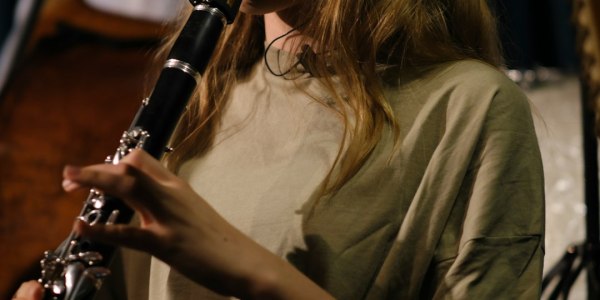
- Clarinet or saxophone lines: Flowing