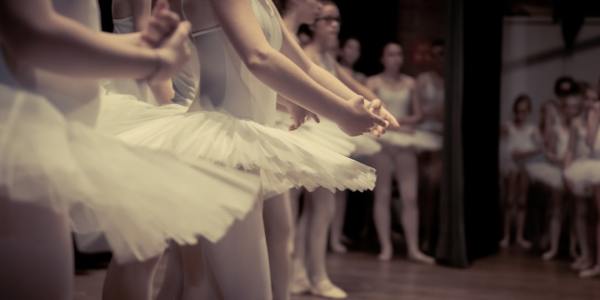
When 14-year-old Emma Chen received her acceptance to the School of American Ballet last fall, she became the third West Des Moines–trained dancer in five years to secure a national company apprenticeship. Her path began not in New York or Chicago, but at a studio tucked between a Hy-Vee and a dental office on Grand Avenue.
Chen's trajectory reflects a broader shift in Iowa's cultural landscape. Once considered a flyover state for serious ballet training, the Des Moines metro area—particularly its western suburbs—has cultivated a cluster of institutions producing competition finalists, collegiate dance majors, and professional company members. For families navigating the often-opaque world of dance education, West Des Moines now presents genuine options, each with distinct philosophies and outcomes.
This guide examines four established programs, what separates them, and how to determine which environment suits a given student's goals.
The Regional Context: Why West Des Moines?
Iowa's ballet infrastructure has historically concentrated in Des Moines proper, anchored by the Des Moines Ballet (now defunct) and Drake University. The westward expansion into suburban West Des Moines during the 1990s and 2000s followed demographic patterns—affluent families seeking arts enrichment without the commute downtown.
The result is a competitive but collaborative ecosystem. Faculty members cross-pollinate between institutions. Students often train at multiple studios simultaneously. And unlike larger markets where pre-professional tracks demand exclusive allegiance, West Des Moines maintains enough geographic proximity and mutual respect to allow hybrid training approaches.
Four Programs, Four Distinct Paths
Ballet Academy of West Des Moines: The Conservatory Model
Best for: Students aiming for collegiate BFA programs or professional company auditions; ages 10–18 with demonstrated technical facility
The Ballet Academy operates closest to a traditional European conservatory. Founded in 2003 by former Kansas City Ballet soloist Margaret Holloway, the school adheres to the Vaganova method—a rigorous Russian system emphasizing precise placement, gradual strength building, and systematic progression through eight levels.
Standout features:
- Minimum 4.5 hours weekly for Level 4+ students, with upper levels training 12–15 hours
- Annual examinations with visiting master teachers from major companies
- 2022–2024 graduates accepted to Indiana University, Butler University, and Oklahoma City Ballet's second company
The academy's pre-professional division requires written contracts committing to attendance policies and cross-training restrictions (no concurrent competition team participation). This selectivity creates a self-selecting cohort of seriously focused students, but may overwhelm recreational dancers or late starters.
"We had three studios to choose from within ten minutes of our house," says parent Jennifer Okonkwo, whose daughter trained at the academy from ages 8 to 16 before enrolling at the University of Arizona. "Margaret's was the only one that treated ballet as academic discipline, not extracurricular activity."
West Des Moines School of Ballet: Classical Purity with Adult Accessibility
Best for: Late beginners seeking solid fundamentals; adult learners; students prioritizing clean technique over performance volume
Now in its thirty-second year, the West Des Moines School of Ballet represents the area's longest continuously operating classical program. Founder and artistic director Patricia Voss, a former Joffrey Ballet dancer, maintains an almost archival commitment to pedagogical tradition.
Standout features:
- Cecchetti-based syllabus with certified examination track
- Dedicated adult beginner and intermediate divisions (ages 18–65+), rare in suburban markets
- Pointe readiness assessments requiring minimum two years of pre-pointe conditioning, regardless of age
Voss's approach deliberately slows the rush toward pointe work and variations that characterizes some competitors. The school produces fewer competition medalists but garners respect from university programs for technically clean, injury-resistant graduates.
Class sizes remain intentionally small—capped at twelve for elementary levels, eight for pointe—creating individualized correction but limiting enrollment flexibility. Waitlists for popular time slots can extend two semesters.
Iowa Dance Theatre: Where Training Meets Professional Performance
Best for: Students craving stage experience; contemporary ballet interests; those testing professional viability before college commitments
Unlike the previous entries, Iowa Dance Theatre functions primarily as a professional repertory company with an attached school rather than a school with occasional performance opportunities. This structural difference fundamentally shapes the training experience.
Standout features:
- Annual production schedule including Nutcracker, spring repertory program, and contemporary works
- Students cast alongside professional company members in corps and soloist roles from age 14
- Contemporary and modern technique requirements alongside classical ballet
The company's artistic director, James Wallace, recruits professional dancers nationally for seasonal contracts, creating genuine mentorship opportunities. Students observe company class daily and may be invited to cover injured professionals—real-world pressure that accelerates maturity but demands emotional resilience.
The trade-off involves less systematic progression than academy models. Training quality varies with company scheduling demands, and students prioritizing examination