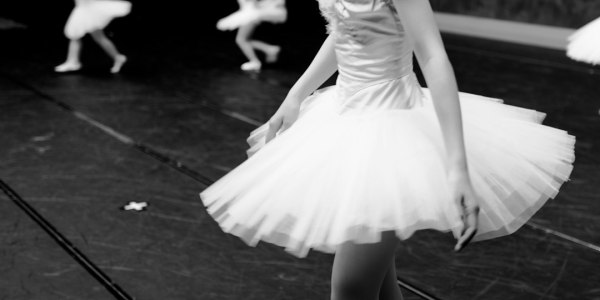
The alarm screams at 4:30 a.m. For most teenagers in Maeser, Utah, this is the dead of night. For 15-year-old Elara, it’s the start of her commute. She’ll be in the car by 5, navigating dark, icy highways for three hours to make an 8:00 a.m. pointe class in Salt Lake City. This isn’t a one-time adventure; it’s her weekly ritual. In the shadow of the Uinta Mountains, where life orbits around cattle ranches and community sports, the path to a ballet career isn’t just challenging—it’s a marathon of logistics, grit, and sheer passion.
This isn't your typical "best of" list. Here, "excellence" isn't handed to you; it's forged in early mornings and long drives. Let's map the real pathways, from the convenient to the committed.
The Close-to-Home Foundation: Building Love in Vernal
Your first stop, just a quick 10-minute drive to Vernal, is the Vernal Dance Academy. This is where the spark is lit. Think of it as your essential launchpad. The vibe here is community-first. You’ll find toddlers in tutus discovering their toes, teens laughing through jazz combos, and adults reclaiming their plié. The ballet training is solid and foundational. You’ll learn the positions, get a feel for the music, and maybe even perform in their annual spring show at the high school auditorium.
This studio is perfect if your goal is to dance for joy, fitness, or to build a strong base as a younger child. The tuition won’t break the bank, and the atmosphere is supportive. But if your eyes are on a professional stage, you’ll quickly feel the walls of this nurturing space. It’s where the journey begins for many, but rarely where it ends for the truly devoted.
The Summer Intensive Lifeline: Immersion Without Relocation
For the dedicated dancer who can’t manage a weekly six-hour round trip, summer becomes your secret weapon. The Brigham Young University Summer Dance Workshops in Provo are a game-changer. Imagine packing months of training into one or two transformative weeks. You’re living on a college campus, eating, sleeping, and breathing ballet with other serious students from across the state.
You’ll train with university professors who’ve danced on real stages and sweat through guest classes with artists from Ballet West. It’s a concentrated dose of the pre-professional world. You return to Maeser in the fall different—sharper, more inspired, carrying a notebook full of corrections. It’s not a replacement for consistent training, but it’s an invaluable bridge, a yearly reset that proves your dream is real and shared by others.
The Pre-Professional Pipeline: The Salt Lake City Commitment
Now, we’re talking about the path Elara chose. This is for the dancer who isn’t just serious—they’re resolute. The Ballet Conservatory at the University of Utah in Salt Lake City is the undisputed heavyweight. Getting here is a pilgrimage. The training is brutal, beautiful, and exacting. We’re talking 15+ hours a week in the studio, live piano accompaniment, and teachers who were once principal dancers in major companies.
This is where technique is honed to a razor’s edge and artistry is demanded, not just encouraged. The payoff is direct: a shot at their university BFA program, scholarships, and auditions for companies like Pacific Northwest Ballet. But this path asks for everything. It means your family’s life revolves around your schedule. It means homework done in the car, friendships maintained over FaceTime, and a childhood shaped by a singular, burning goal.
The Real Talk: Choosing Your Path
So, how do you choose? Forget the brochures for a moment. Ask yourself the hard questions.
What does the faculty really know? A teacher with a BA in dance is great for starters. A teacher who danced Balanchine roles with a major company? That’s a different universe of knowledge.
Look at the floor. Seriously. If the studio has concrete under thin vinyl, run. Your joints will thank you for finding a place with a proper sprung floor. Can you watch a class? Do the students look focused, or are they just going through the motions?
And what about the philosophy? Is it all about rigid, old-world discipline, or does it nurture the whole artist? One isn’t necessarily better, but one will suit you better.
For the Maeser dancer, ballet is a test of will long before it’s a test of skill. It’s a choice to pursue beauty in a landscape of vast, practical horizons. It’s trading sleep for a spot in the car, community recitals for conservatory exams. It’s knowing that every grand jeté you dream of is fueled by a thousand miles driven in the dark. The stage, when you finally reach it, won’t just be where you dance. It will be the culmination of a journey that began on a lonely, hopeful highway, chasing a grace that most will never understand.