Where ballet's precision meets contemporary's freedom, and music finds a physical voice.
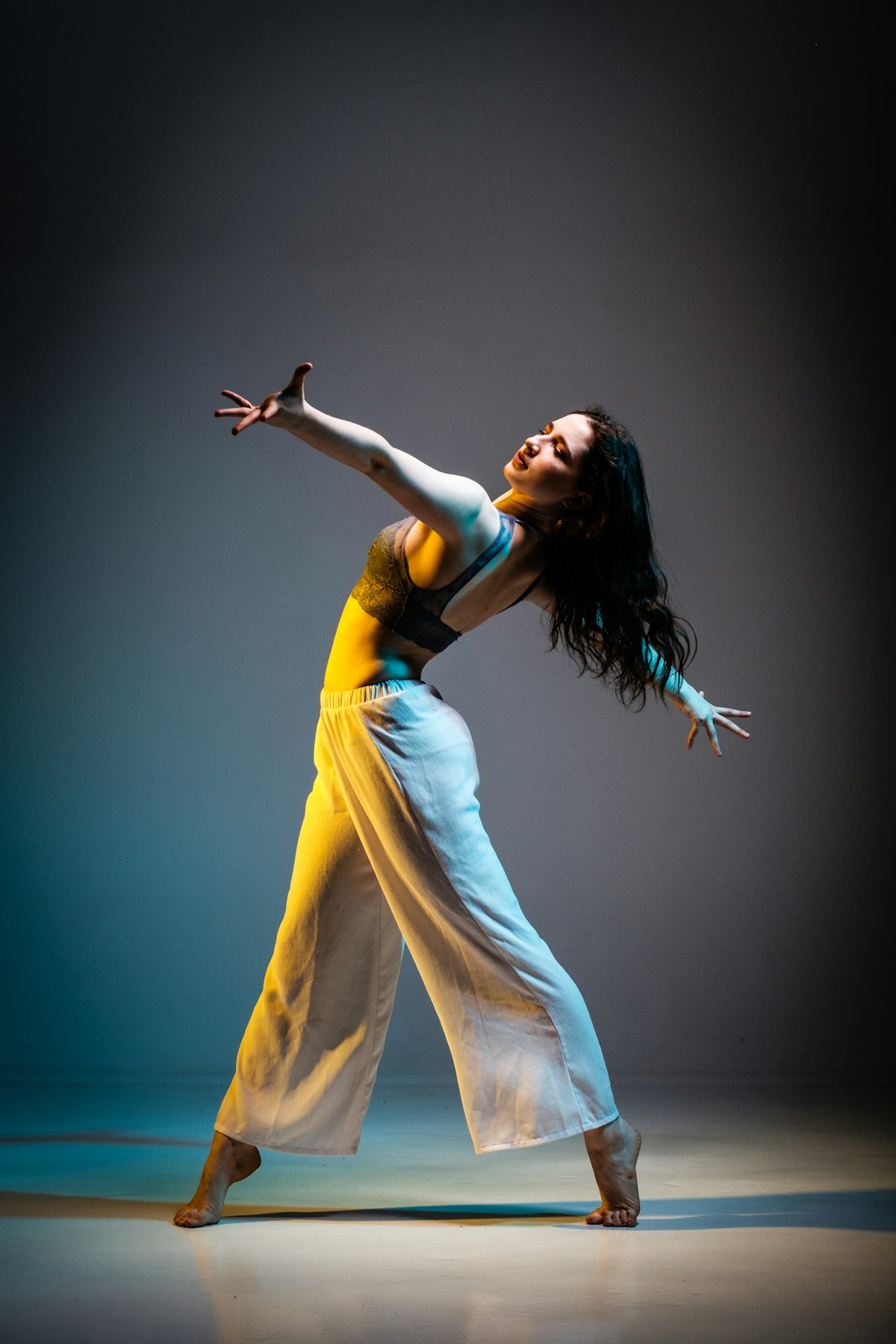
The body becomes a brushstroke against the canvas of silence. | Image: Unsplash
It exists in the space between a breath and a beat. It’s the shudder of a shoulder that speaks of heartbreak, the unfurling of a wrist that whispers hope, the suspended leap that screams joy. This is lyrical dance: not just steps to music, but the physical manifestation of feeling itself.
In a world saturated with words, lyrical dance offers a profound alternative—a direct line from the soul to the body, bypassing the clutter of language. It’s a conversation between the dancer and the music, where the choreography is the vocabulary and every extension, turn, and fall is a sentence laden with meaning.
The Alchemy of Technique and Torrent
At its core, lyrical is a hybrid, born from the marriage of ballet’s disciplined structure and contemporary dance’s emotional abandon. A dancer must have the technical foundation—the pointed feet, the controlled turns, the powerful legs—to provide a clear, strong vessel for the emotion. Without it, the feeling spills out, formless and chaotic.
But technique alone is just an empty shell. The magic happens when that technique is infused with intention. A développé isn’t just a slow leg lift; it’s a reaching, a yearning, a question posed to the heavens. A chassé isn’t just a sliding step; it’s the pursuit of something just out of reach. The dancer becomes a storyteller, using their instrument—their body—to translate the song’s narrative into a visual poem.
The Translator's Toolkit: Key Elements of Lyrical
- Musicality: It’s not just dancing *to* the music, but dancing *inside* it. Hitting the lyrics, breathing through the melody, punctuating the crescendos with movement.
- Fluidity & Connectivity: Movements flow into one another without jarring stops. Energy travels seamlessly from fingertip to toe, creating a sense of endless motion.
- Dynamic Range: The powerful contrast between sharp, sudden contractions and languid, sustained extensions mirrors the complexity of human emotion.
- Facial Expression & Eye Focus: The gaze is never vacant. It directs the audience’s attention and reveals the internal world of the dancer.
Beyond Narrative: The Abstract Heart
While lyrical can tell a specific story, its true power often lies in abstraction. It can convey the essence of “longing” without specifying what is longed for. It can embody “resilience” without naming the struggle. This allows the audience to project their own experiences onto the movement, creating a deeply personal and cathartic connection.
You don’t just watch a lyrical piece; you feel it in your own body. You might feel a tightening in your chest during a sequence of constrained, angular shapes, or a sense of release as the dancer finally breaks into wide, soaring leaps. This is kinesthetic empathy—the unspoken dialogue between the mover and the witness.
A Living, Evolving Dialect
Lyrical dance is not a relic. It evolves with the music and the cultural moment. While it found its early voice with artists like Sarah McLachlan and Enya, today it pulses to the sounds of Billie Eilish’s haunting whispers, the orchestral swells of cinematic soundtracks, and the raw vulnerability of indie folk.
Its popularity on stages and social media platforms speaks to a universal hunger for authentic emotional expression. In an age of digital curation, lyrical dance offers a moment of unvarnished truth—a three-minute journey into the beautiful, messy landscape of what it means to feel.
So the next time you see a lyrical dancer, don't just look for the tricks or the perfect line. Look for the story in the curve of their spine. Listen for the confession in their pause. Watch as the unspoken language of the heart takes shape, breathes, and, for a fleeting moment, becomes utterly understood.










