The city is not a distraction from the art of dance. It is the stage, the collaborator, and the most demanding improvisation partner you’ll ever have.

For too long, the dance studio has been sanctified as the sole temple of creation. Four mirrored walls, a sprung floor, the familiar smell of rosin and sweat. It’s a controlled environment, a vacuum. But what happens when we step outside, when we let the chaotic, pulsating rhythm of the city become our score?
The urban landscape is a living, breathing composition of asymmetrical patterns, unintended rhythms, and human geometry. My latest work, *Echoes of Asphalt*, wasn’t born from a piano in a quiet room. It was forged in the syncopated stammer of a subway turnstile, the fluid sway of commuters on an escalator, the sharp, angular shadows cast by a glass skyscraper at golden hour.

The Architecture of Motion
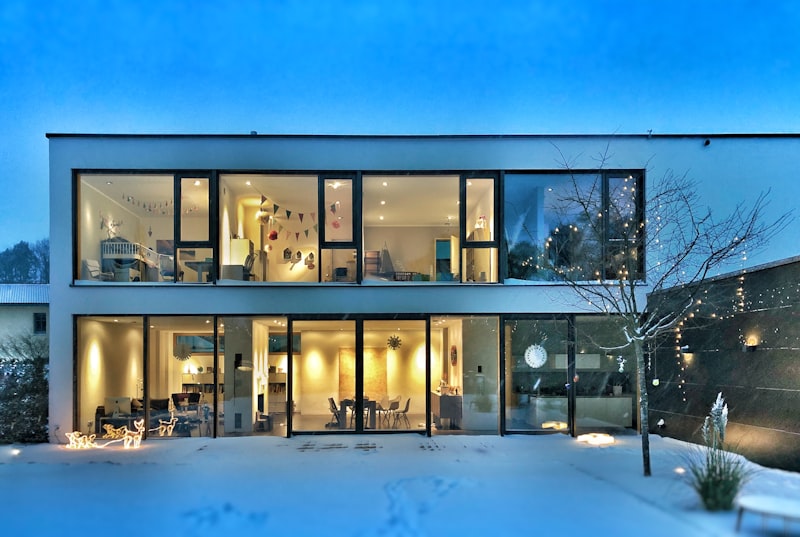
Architecture dictates movement. A long, narrow alleyway compresses energy, suggesting quick, linear, and confined gestures. The vast, open space of a public square invites expansive, centrifugal motion. I often take my dancers to locations before we ever discuss steps. We stand in silence, listening to the space. We observe how light fractures on concrete, how wind tunnels between buildings, how people navigate obstacles. The choreography begins as a response, a physical dialogue with the environment.
"The street is a palimpsest of past movements. Our job is to add a new layer, one that speaks to the now."
Found Sound & The Urban Score
Forget the commissioned composition. The city provides its own symphony. The metallic screech of a train braking, the rhythmic *thump-thump-thump* of a generator, the distant hum of traffic, the sudden silence of a power cut—this is our music. In *Echoes of Asphalt*, we used field recordings from a construction site layered with the whispers of a public library. The dancers learned to internalize these textures, their movements becoming visual representations of sonic grit and digital glitches.
Try This: The Commuter Study
Spend 20 minutes in a busy transit station. Don’t move. Just watch. Identify three distinct movement motifs. Is it the hurried, forward-leaning lurch of someone late? The slow, weighted drag of exhaustion? The playful, skipping dodges through a crowd? These are your movement phrases. Take them back, abstract them, amplify them. You now have the seed of an urban-inspired phrase.
From Observation to Embodiment
The key is not to mimic, but to translate. We aren’t miming the act of swiping a metro card. We’re extracting the quality of that gesture—its swift, dismissive, functional efficiency—and applying it to a full-bodied phrase. How does "the shrug of a missed bus" feel in the shoulders? How does "the impatient hop at a crosswalk" travel through the spine?
This process democratizes inspiration. It argues that art isn't found only in curated spaces but in the everyday ballet of survival and connection. It makes the dancer an ethnographer and the city a co-author.
The studio will always be our laboratory, the place where we refine and rehearse. But the city, in all its uncontrolled, messy, and vibrant glory, is where we discover. It reminds us that movement is not separate from life; it is a vital, responsive expression of it. So, lace up your shoes, step outside, and listen. The next great piece is already happening all around you. Your task is to join the conversation.










